

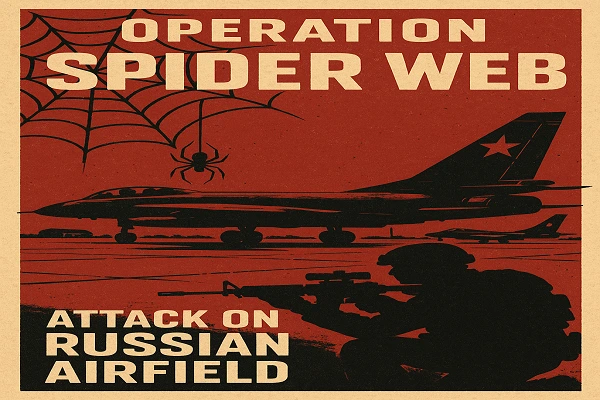
Operation Spider Web: Ukraine’s Daring Drone Strike That Shook Russia
On June 1, 2025, the world woke up to a shocking headline: Ukraine had launched its largest and most advanced drone assault to date, a military operation code-named Operation Spider Web. This coordinated, high-tech attack devastated five major Russian airbases and destroyed over 40 aircraft, marking a dramatic escalation in the Ukraine-Russia conflict.
But beyond the destruction, this mission revealed something far more important—it actively redefined the way modern wars unfold.
What Was Operation Spider Web?
Simply put, Operation Spider Web was Ukraine’s most significant single-day drone offensive against Russian territory since the war began. President Volodymyr Zelenskyy reportedly spearheaded the mission, meticulously planning it over 18 months.
Launching 117 drones simultaneously, Ukraine targeted key Russian airbases across multiple time zones, including:
- Belaya
- Dyagilevo
- Ivanovo Severny
- Olenya
- Ukrainka
These bases were critical hubs for Russia’s strategic bomber fleet. The operation didn’t just disrupt infrastructure—it sent a clear message: Ukraine has both the will and the technology to hit deep inside Russian lines.
How Did Ukraine Pull It Off?
The brilliance of Operation Spider Web lay in its deception and precision.
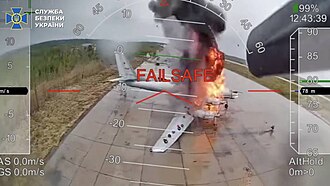
To begin with, Ukrainian forces embedded drones inside Russian-looking civilian trucks and containers. Once inside Russian territory, they quietly launched the UAVs—avoiding detection by Russian air defense systems entirely.
Simultaneously, drones were launched from multiple interior points across Ukraine. This multi-front attack confused and overwhelmed Russian defense systems, ensuring stealth entry and high-impact damage.
Each drone carried precision-guided explosives, targeting hangars, runways, and fuel storage facilities. It was not just an attack—it was strategic, psychological, and symbolic warfare.
What Was Destroyed?
The damage from Operation Spider Web was catastrophic for Russia’s air capabilities:
- Ukrainian drones either destroyed or rendered inoperable the Tu-95 and Tu-22M3 bombers, known for their long-range strike potential.
- Ukrainian forces took out the Il-78 refueling aircraft, which are vital for extending fighter jet missions.
- Ukrainian drones heavily damaged the A-50 AWACS surveillance planes, which are crucial for intelligence gathering.
In total, over 41 aircraft were destroyed, causing an estimated $7 billion USD in losses. Many of these aircraft were legacy systems—no longer in production—making the damage particularly difficult for Russia to recover from.
Putin’s Response and Global Reaction
During the height of the attack, President Vladimir Putin reportedly called former U.S. President Donald Trump in a tense 75-minute conversation. Putin threatened retaliation, warning that Russia would respond forcefully.
Trump’s response was measured but critical. He acknowledged that the strike, though technically impressive, heightened global tension and did not bring the conflict closer to peace.
Meanwhile, NATO officials called the strike a “wake-up call” for global airbase defense. Analysts around the world praised Ukraine’s asymmetric warfare strategy, while social media platforms exploded with real-time videos, expert takes, and satellite imagery.
Why Operation Spider Web Is a Game-Changer
Operation Spider Web didn’t just damage runways—it reshaped military doctrine.
1. Low-Cost vs. High-Value
Ukraine used relatively low-cost drones to destroy billion-dollar targets, proving the effectiveness of smart, asymmetric warfare.
2. Psychological Impact
The surprise attack demoralized Russian forces and showcased Ukraine’s rising technological edge.
3. Operational Sophistication
Coordinating simultaneous drone launches across zones and countries requires elite planning and execution.
4. Air Power Disruption
With several critical bombers and tankers gone, Russia’s long-range strike capability took a massive hit—at least in the short term.
This mission may also mark a new era in warfare, where AI, drones, and cyber-surveillance lead the charge.
What Lies Ahead?
The ripple effects of Operation Spider Web are just beginning.
- Nations worldwide are expected to accelerate investments in drone defense and surveillance.
- Military tactics are shifting, with a new focus on mobility, deception, and autonomous systems.
- Smaller nations or proxy forces may adopt similar tactics, altering the balance of power in future conflicts.
However, this raises important ethical questions. As drone warfare becomes more common, civilian safety, rules of engagement, and escalation control will become increasingly urgent topics.
Explore Operation Sindoor, India’s steadfast commitment to combating terrorism. Discover the strategies and resilience.
Conclusion
Operation Spider Web was more than a drone attack—it was a defining moment in 21st-century warfare. Ukraine leveraged innovation, planning, and courage to send a powerful message: even against a superior force, strategy and technology can change the game.
As Russia recalibrates and the world watches, one thing is clear—the age of traditional warfare is over, and drones are leading the battlefield of the future.
Discover Operation Sindoor 2.0, a vital initiative aimed at safeguarding women’s rights and safety in India.
Frequently Asked Questions (FAQs)
A Ukrainian military strike on June 1, 2025, using 117 drones to attack five key Russian airbases, causing massive destruction.
Ukrainian forces destroyed or severely damaged over 41 aircraft, including bombers, tankers, and surveillance planes.
They transported drones in disguised vehicles that looked like civilian trucks, avoiding detection and launching attacks from within Russiterritory.
He issued a direct threat during a phone call with Donald Trump, warning of serious retaliatory action.
The operation demonstrated how smart, tech-based warfare can overcome traditional military strength, shifting the global military playbook.