
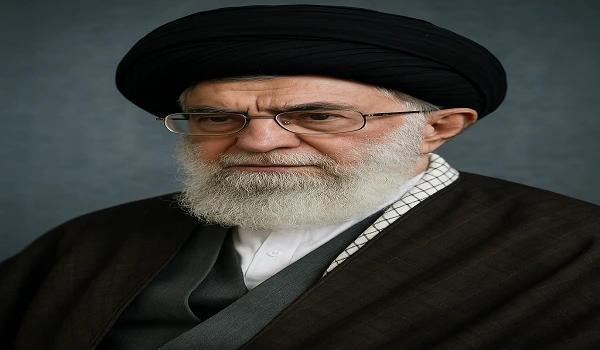
Who Is Ali Khamenei? A Deep Dive into Iran’s Supreme Leader
Whenever Iran captures global headlines, one name consistently resurfaces — Ayatollah Ali Khamenei. He’s not just a familiar face in Iranian politics; he’s the Supreme Leader, the single most powerful figure in the Islamic Republic. But how did he rise to such influence? What shaped his worldview? And why does he play such a central role in both Middle Eastern affairs and global diplomacy?
Let’s take a closer look at Ali Khamenei’s life, legacy, and ongoing influence beyond what the headlines often show.
A Humble Beginning in Mashhad
Ali Hosseini Khamenei was born in 1939 in the holy city of Mashhad, located in northeast Iran. Coming from modest roots, his father was a respected but financially struggling religious scholar. As was typical for boys in religious families, Khamenei began studying Islam at a young age.
Eventually, he moved to Qom, Iran’s theological capital, where he trained under prominent Shia clerics, including Ayatollah Ruhollah Khomeini, who would later lead the 1979 Islamic Revolution.
Interestingly, Khamenei wasn’t confined to theology alone. He also had a passion for literature and poetry, translating Arabic and Russian texts into Persian. This intellectual curiosity later influenced his political speeches and philosophical writings.
Rising Through Revolution
During the 1960s and 1970s, Khamenei emerged as a firm opponent of Shah Mohammad Reza Pahlavi, Iran’s pro-Western monarch. Through fiery lectures and underground publications, he championed the cause of Islamic revolution — a stance that repeatedly put him in prison and forced him into exile.
Nonetheless, his allegiance to Khomeini’s vision never wavered. So, when the Islamic Revolution succeeded in 1979, Iran transitioned from a monarchy to a theocratic republic. Khamenei quickly rose through the ranks of the newly established regime.
From President to Supreme Leader Ali Khamenei
In the post-revolution era, Khamenei served in several key roles, most notably as President of Iran from 1981 to 1989. Known for his discipline and loyalty to Islamic principles, he remained close to Khomeini until the latter’s death.
When Ayatollah Khomeini passed away in 1989, Iran faced a crucial question: Who would take the reins next?
At that time, Khamenei was not the highest-ranking cleric in Iran. Many considered him an unlikely successor. However, with strong political backing and Khomeini’s implicit endorsement, he was appointed as Supreme Leader — the most powerful position in the country.
Although controversial, this appointment permanently positioned Khamenei at the top of Iran’s political and religious hierarchy.
What Does the Supreme Leader Ali Khamenei Do?
In most nations, executive power resides with the president or prime minister. In contrast, Iran’s Supreme Leader holds authority above all elected officials.
Ali Khamenei controls:
- Foreign policy and nuclear negotiations
- Military operations and defense strategy
- Judicial and clerical appointments
- Cultural, media, and education policies
- Oversight of the Islamic Revolutionary Guard Corps (IRGC)
In short, while presidents come and go, Khamenei’s influence shapes virtually every critical decision in the country.
A Foreign Policy of Resistance
From the beginning, Khamenei has been a vocal critic of Western powers, particularly the United States and Israel. He often refers to the U.S. as the “Great Satan,” echoing revolutionary rhetoric from the 1979 uprising.
He has consistently supported:
- Hezbollah in Lebanon
- Hamas in Palestine
- Various Shia militias in Iraq and Syria
Despite international sanctions and diplomatic efforts, Khamenei has continued to support Iran’s controversial nuclear program. While the Iranian government insists the program is for peaceful energy purposes, critics argue it could lead to weaponization.
Interestingly, while skeptical of the West, he allowed President Hassan Rouhani to negotiate the 2015 Iran Nuclear Deal (JCPOA). However, his overall posture remains firm: distrust Western diplomacy and protect national sovereignty.
Join us for the epic clash of Gukesh vs Magnus at Norway Chess 2025. Explore in-depth coverage and expert commentary on aadishworld.com
Domestic Discontent and Rising Protest Movements
Though Khamenei enjoys enduring support among Iran’s conservative base, internal dissent has grown sharply over the years.
In 2009, following disputed election results, mass protests erupted in what became known as the Green Movement. More recently, in 2022, the death of Mahsa Amini — a young woman detained for improperly wearing her hijab — sparked nationwide demonstrations.
In both cases, the regime responded with harsh crackdowns, resulting in arrests, deaths, and global condemnation.
Despite these challenges, Khamenei has maintained a firm grip on power. He routinely blames unrest on foreign interference, particularly from the West.
The Religious Pillar of Velayat-e Faqih
Although he was not a top-ranking cleric when first appointed, Khamenei was granted the title of “Ayatollah” after assuming leadership.
He remains a staunch advocate of Velayat-e Faqih, the Shia doctrine that grants supreme political authority to an Islamic scholar until the return of the Hidden Imam — a core belief in Twelver Shi’ism.
His sermons often blend religious conservatism with political ideology, urging Iranians to resist Western cultural influence and uphold Islamic values.
A Legacy Still in Progress
Now in his mid-80s, Khamenei has ruled for more than 35 years, longer than any other Iranian leader in the modern era. His legacy is deeply interwoven with Iran’s current theocratic structure, military reach, and geopolitical strategy.
Yet, questions loom large:
- Who will succeed him?
- Will Iran embrace reform or tighten its ideological grip?
- Can the next Supreme Leader maintain the same level of control?
Only time and history will reveal the answers.
Final Thoughts about Ali Khamenei
Ali Khamenei is far more than just Iran’s Supreme Leader. He is a symbol of continuity, ideology, and resistance in a country that has seen seismic shifts in politics and society over the last four decades.
While many admire his resolve and leadership, others see his reign as emblematic of repression and stagnation. Regardless of opinion, his role has undeniably shaped Iran’s destiny and global perception.
As the world watches and speculates about Iran’s future, one thing is clear: Ali Khamenei’s story is far from over.
FAQs: Who Is Ali Khamenei and What’s His Role?
The Supreme Leader is the head of power in Iran, with authority over the military, judiciary, foreign policy, and major state decisions. He is not elected like the rest of the leaders, but appointed for life.
No. The Supreme Leader is chosen by the Assembly of Experts, a group of clerics who are themselves elected by the people, but behind closed doors.
He became Supreme Leader in 1989 after the death of Ayatollah Khomeini, meaning he has ruled for over 35 years.
Critics accuse him of authoritarian rule, human rights violations, suppressing protests, and limiting freedoms in Iran. Supporters view him as a protector of Islamic values and national independence.
He has always been critical of Western powers, especially the U.S. and Israel. He supports resistance movements and feels that Western control of Iranian politics and culture must be challenged.
His death or resignation could lead to political instability. It completely depends on who his successor is and if the successor follows the same hardline policy or opens up for change.